
Last updated November 23, 2026
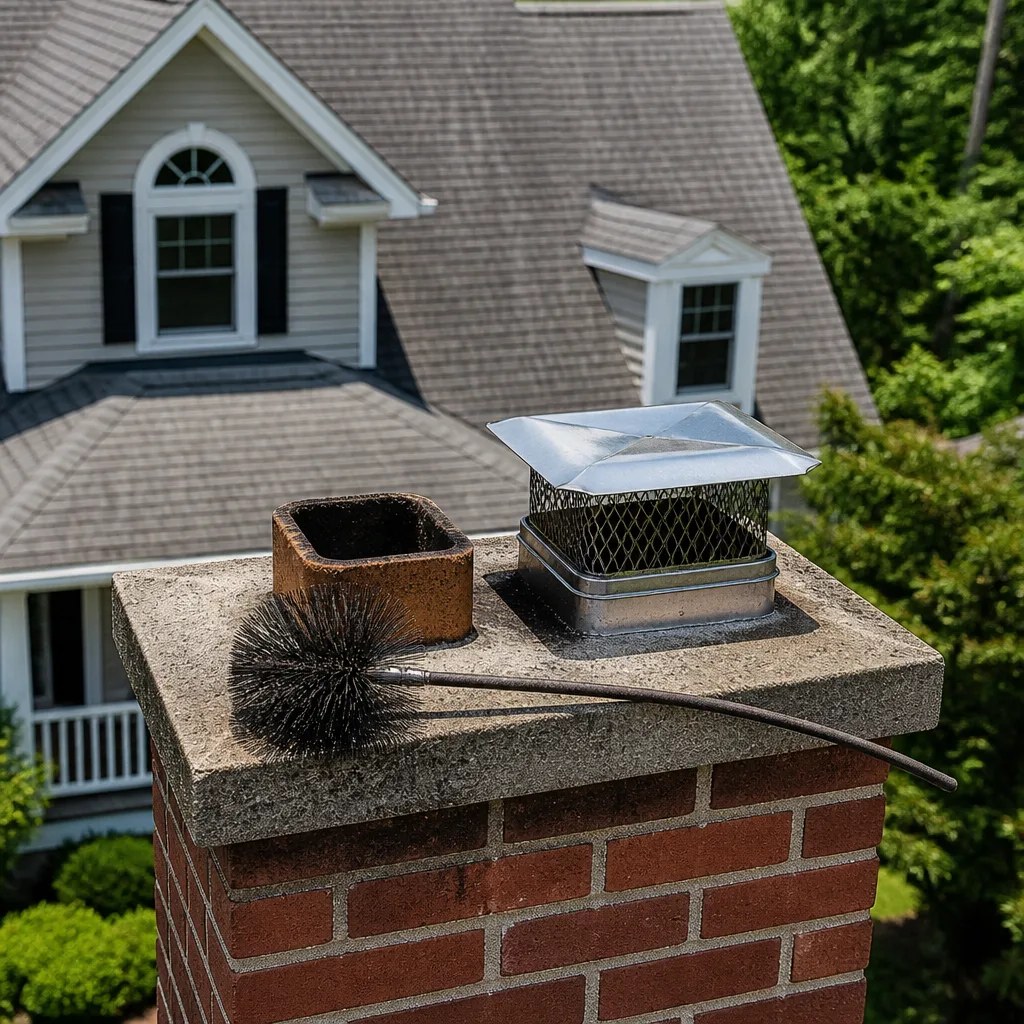 Sweep & inspection
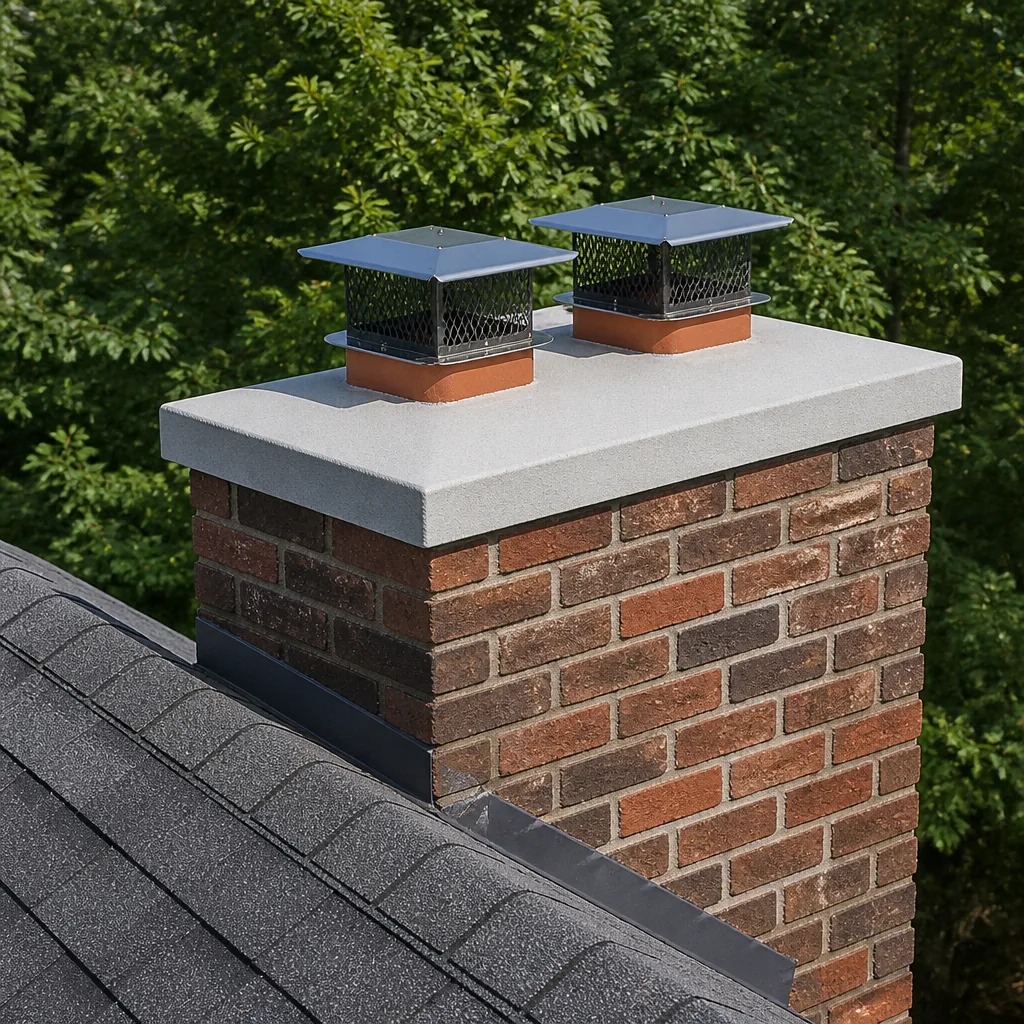 Caps & crowns
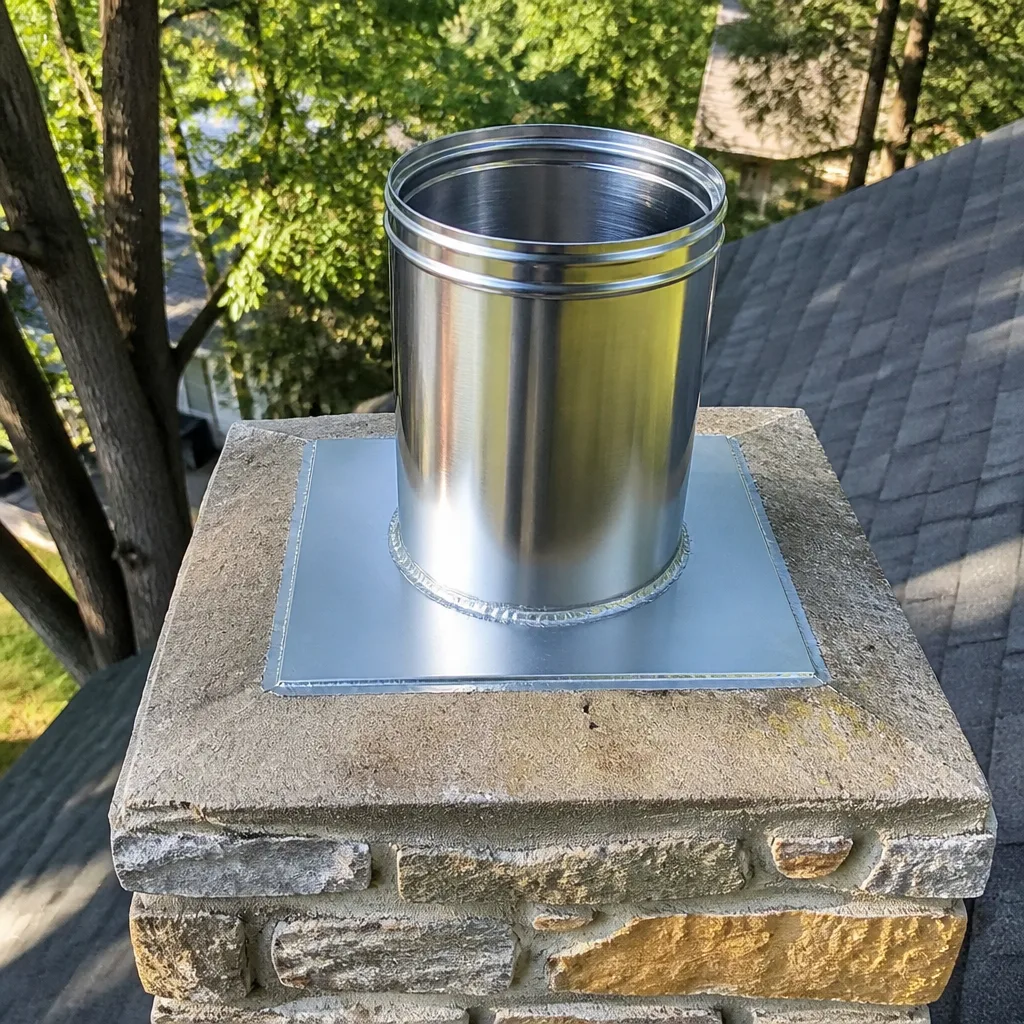 Flue relining
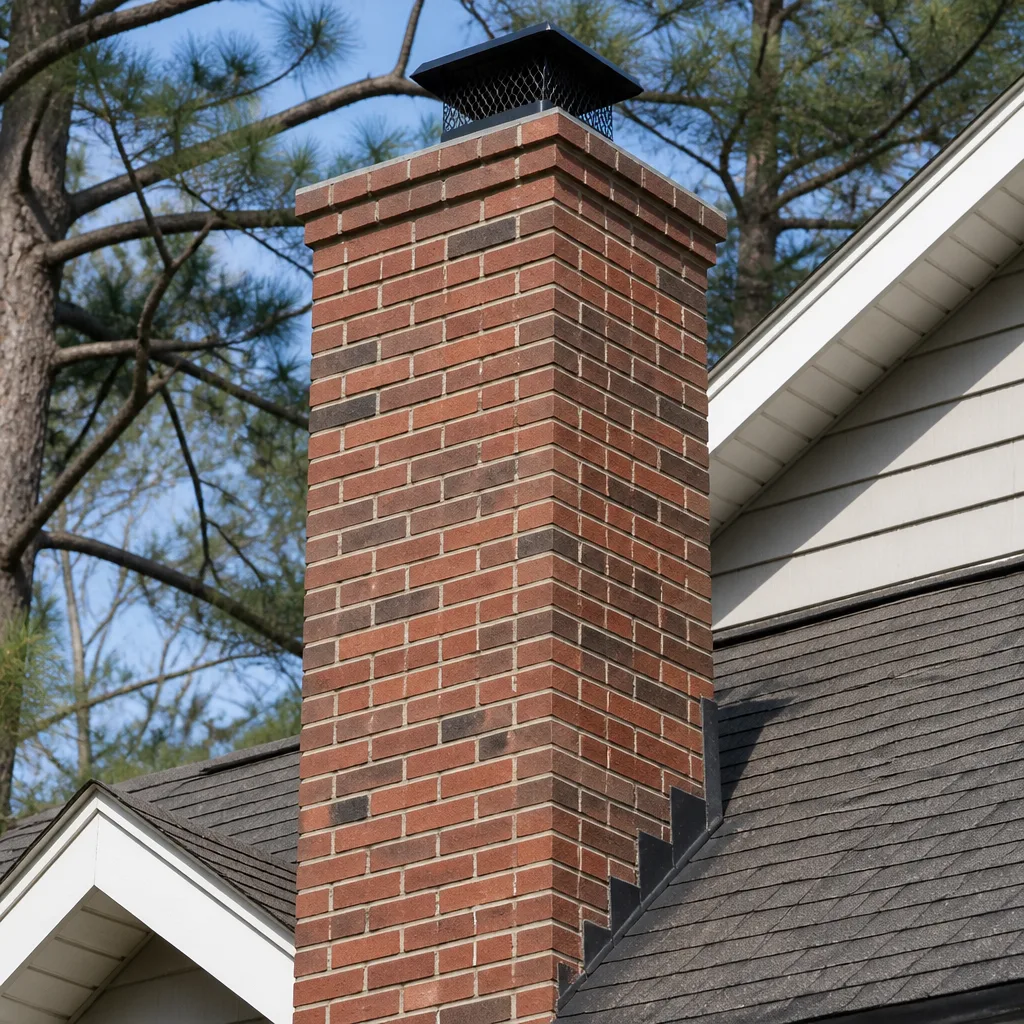 Masonry repair
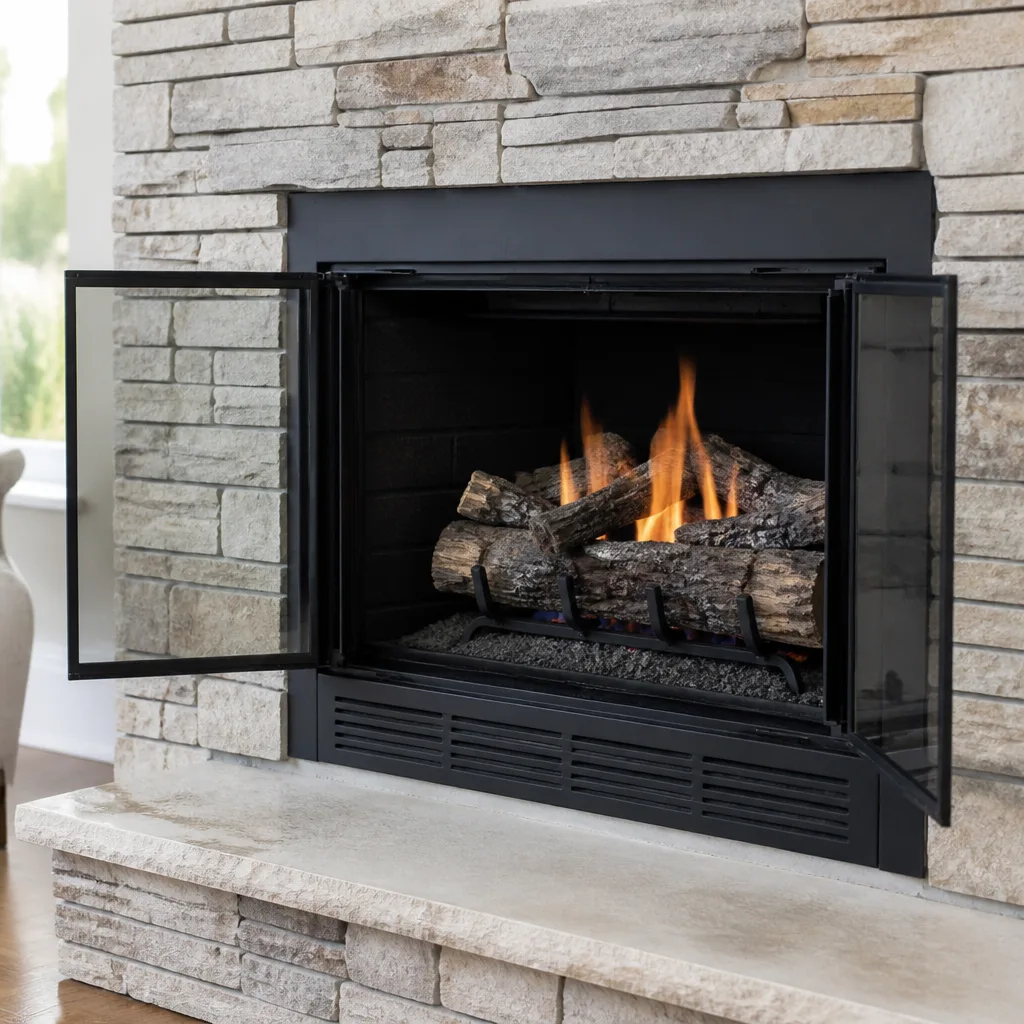 Gas fireplace service
Level 1 sweep and inspection to the NFPA 211 annual standard - flue, crown, cap, and flashing checked and photographed
Chimney sweep logs do not sweep chimneys. They loosen some creosote - which then falls where a brush and vacuum still have to collect it.
How to Hire a Chimney Cleaning Contractor in Bellevue: A Step-by-Step Guide
In Bellevue, chimney cleaning is listed as a service by HVAC companies, handymen, and even carpet cleaners, and that is the problem. A brush on a rope can knock creosote off a flue, but the person holding the brush may not be able to tell you whether the liner behind it is cracked, whether the crown is failing, or whether the cap has been letting water in for years. What looks like a bargain sweep can be a paid visit that diagnoses nothing.
This guide gives you a concrete framework for separating dedicated chimney specialists from add-on operators. You’ll learn what credentials to ask about, which questions expose a generalist, how to read a quote line by line, and how to verify insurance actually covers chimney work. Bellevue homeowners who use their fireplaces every winter have a lot riding on getting this right.
Quick Answer
To hire a chimney cleaning contractor in Bellevue, ask for CSIA credentials, insist on a written quote that itemizes the sweep, the inspection level, and a cap and crown check, and confirm the contractor’s insurance specifically covers chimney and flue work. A true specialist can also answer which liner systems they install and whether they handle structural repairs in-house. If the answers are vague, the contractor is probably a generalist with a brush.
Styles & brands we work with
- Sweep & inspection
- Caps & crowns
- Flue relining
- Masonry repair
- Gas fireplace service
Table of Contents
- Why Bellevue’s Market Makes This Harder Than It Should Be
- The Credentials That Actually Matter
- Seven Questions That Expose a Generalist
- What a Real Chimney Quote Itemizes
- How to Verify Insurance Covers Chimney Work
- Reading Reviews Like a Chimney Specialist
- Inspection Levels and When You Need Each
- Common Mistakes to Avoid
Why Bellevue’s Market Makes This Harder Than It Should Be
Bellevue’s housing stock is a mix of older homes along the lakes and newer construction on the east side, and both come with chimneys that need real attention. The wet side of Washington means months of rain driving against masonry, caps, and crowns. A chimney that never gets a proper cap check in a rainy climate is a chimney slowly absorbing water through brick and mortar. Add decades of fireplace use and you get a system with specific failure points that a generalist won’t recognize.
The trouble is that “chimney cleaning” appears on service menus where it doesn’t belong. HVAC companies tack it onto duct work. Handymen offer it next to gutter cleaning. The reason it matters: chimney work involves fire, carbon monoxide, and structural masonry, and the liability behind it is different from hanging a shelf. A general contractor’s policy typically covers general construction, not flue and firebox work. When something goes wrong, that gap shows up.
What Bellevue homeowners actually need is one accountable specialist who can sweep, inspect, and repair without handing the job off. That’s the model we work from at Bellevue Chimney Sweep Co: sweep, inspect, repair masonry, install caps and crowns, and reline, all handled by the same crew, not referred out. When a sweep turns up a cracked crown or a failing liner, the fix happens in the same call rather than in a second appointment with a stranger.
Bellevue also has a layer of complexity most markets don’t: a large share of homes change hands and get inspected for real estate transactions and insurance documentation. A chimney assessment that stands on its own, independent of a sweep or repair, is a different deliverable than a quick brush-and-go. Ask any contractor whether they offer inspection as a standalone service. The answer tells you a lot about how they see their own trade.
The Credentials That Actually Matter
The single most useful credential to ask about is the CSIA credential, which stands for Chimney Safety Institute of America. It’s a chimney-specific certification earned through examination and continuing education, and it’s the credential the trade itself recognizes. A general contractor’s license is not a substitute. It proves the contractor is licensed to build, not trained to assess a flue, a firebox, or a liner.
CSIA matters because it’s the difference between someone trained to look and someone trained to clean. A credentialed sweep knows how to evaluate creosote levels, recognize liner deterioration, distinguish a hairline crack from a structural failure, and document findings so they hold up for insurance or real estate purposes. That documentation is what you’re paying for as much as the brushing.
Beyond CSIA, ask about product-specific training. Liner restoration systems and relining materials require manufacturer-level knowledge. HeatShield, for example, is a liner restoration system that addresses deterioration without a full tear-out, and technicians trained in it can evaluate whether your flue qualifies. If a contractor has never heard of HeatShield or can’t explain what it’s for, they’re not equipped to offer it as an option. That’s usually because they don’t stock it and can’t install it.
Finally, ask about the product lines they work with. A specialist sources trade-grade materials: DuraFlex for relining, Olympia Chimney and Copperfield for caps and components, Famco for chimney products. Those names mean something to a contractor who’s in the trade. If the answer is “whatever the hardware store has,” that’s your signal.
Seven Questions That Expose a Generalist
A specialist answers these without flinching. A generalist gets vague, changes the subject, or promises things they can’t deliver. Ask before you book, not after.
- “What liner systems do you install?” A specialist names specific products and explains when each applies. A generalist says “we can handle that” without specifics, because they subcontract it or don’t do it at all.
- “Do you handle structural repairs in-house?” Masonry repair, crown rebuilding, and firebox work should be done by the same company that swept. If the answer is a referral, you’re about to add a second contractor and a second set of hands to your chimney.
- “Is your inspection a standalone service?” A specialist offers inspection independent of a sweep, which matters for real estate and insurance. A sweep-only outfit usually bundles it or skips it.
- “What level of inspection do you perform?” There are three recognized levels. A contractor who can’t explain the difference between them, or who always does the same one, doesn’t understand inspections as a discipline.
- “Do you install chimney caps and crowns?” Cap and crown work stops water intrusion at the source. A sweep-only company can’t execute it in the same visit, so they won’t mention it even when your crown is failing.
- “Are you CSIA credentialed?” The answer should be immediate. Hesitation means no.
- “Can you give me the quote in writing, itemized?” A vague flat-rate quote is a red flag. An itemized quote shows the contractor knows what they’re looking at before they arrive.
We’ve seen every version of the wrong answer. The questions are designed to protect you from the most common one: a generalist who cleans the flue and can’t tell you what they found.
What a Real Chimney Quote Itemizes
A useful chimney quote breaks the job into parts. A vague flat rate doesn’t tell you what’s covered, what’s excluded, or what happens if the sweep turns up a problem. Here’s what a Bellevue homeowner should expect to see on an itemized quote.
- The sweep itself: which flue or flues, and what method. A wood-burning flue gets swept differently from a gas appliance vent.
- The inspection level: stated explicitly, whether level one, two, or three. If it’s not stated, ask.
- Cap and crown check: an explicit line, not an afterthought. This is where water intrusion starts in a rainy climate.
- Firebox and damper assessment: what’s seen and what’s noted. Damper function affects how the chimney drafts.
- Findings and photos: the report you get after the sweep, ideally with images you can see yourself.
- Any recommended repair, priced separately: repairs should be quoted as a distinct scope, not folded into the sweep price.
A flat-rate quote that covers “chimney cleaning” and nothing else signals that the contractor plans to clean and leave. If they find a cracked crown or a deteriorated liner, you’ll be calling someone else anyway, and that someone else will be doing the inspection you should have had the first time. Ask what the quote covers before you book, and ask what happens if the sweep finds a problem.
When we quote a Bellevue job, the price is set per job by the written estimate, and the estimate is free. You should never feel like you’re guessing what the number covers.
How to Verify Insurance Covers Chimney Work
This is the step most homeowners skip, and it’s the one that matters most. “Insured” is not enough. General liability insurance is broad but often excludes specialty trades unless the policy is written for them. Chimney sweeping, masonry repair, and relining involve fire risk, height work, and structural components, and the policy needs to reflect that.
Here’s how to check without being awkward about it:
- Ask for a certificate of insurance. Any legitimate contractor provides one on request. It names the policyholder, the coverage type, and the effective dates.
- Check the coverage description. Look for language covering chimney, flue, masonry, or fireplace work specifically. If it says “general construction” or “handyman services,” ask whether chimney-specific work is excluded.
- Ask about the limits. A policy with low limits won’t cover a masonry repair if something fails. You don’t need to be an insurance expert to ask the number.
- Confirm the certificate matches the company you’re hiring. Subcontracted work often means a different insurer and a different policy, and that’s another reason to insist on in-house.
This is where a dedicated chimney specialist differs from a generalist. A company that does chimney work as its core service carries coverage matched to that work because it has to. A handyman who adds chimney cleaning to the menu likely carries a policy that doesn’t contemplate it. If a contractor gets defensive about the question, treat that as an answer. The local pro is licensed and insured as their state requires, and verifying the specifics is your job, not an inconvenience.
Reading Reviews Like a Chimney Specialist
Reviews for chimney contractors carry specific tells that don’t apply to other trades. Read for these patterns rather than star counts.
- Upsells without photos. A reviewer saying “they told me I needed a new liner and I had no idea if it was true” is a warning. A specialist shows you camera footage or photos of the finding so you can see it yourself.
- No mention of inspection findings. Reviews that only say “clean and quick” tell you the visit was a sweep and nothing more. A thorough contractor’s reviews mention what was found, even if the customer was relieved to hear it was minor.
- Vague pricing complaints. “The price went up on arrival” is a sign the original quote didn’t itemize. That’s a booking problem, not a cleaning problem.
- Referral mentions. If a reviewer says “they had to bring in someone else for the repair,” the contractor isn’t full-spectrum. You’ll inherit the handoff.
- No mention of credentials. Reviews that name CSIA or a specific inspection level suggest the customer knew what to ask. That’s a contractor who attracts informed customers.
The pattern we watch for is honesty about findings. The right answer to a smaller, cleaner chimney than expected is “your chimney is in good shape,” not a manufactured problem. A contractor who tells you when work can safely wait is the one to keep.
Inspection Levels and When You Need Each
Chimney inspections come in three recognized levels, and knowing which you need keeps you from paying for more or less than the job requires. Most Bellevue homeowners booking a routine sweep need level one.
- Level one: the standard inspection performed with a sweep. Covers the readily accessible portions of the chimney and firebox. Appropriate for a chimney in regular use with no known problems.
- Level two: includes a video camera inspection of the flue and access to areas that aren’t visible from the firebox. Required after a chimney fire, when the appliance or fuel type changes, or when a property changes hands. Buyers and sellers in Bellevue typically need this level for real estate documentation.
- Level three: reserved for confirmed or suspected hazard, and may require opening parts of the chimney structure to investigate. Rare, and usually follows a level two finding.
If you’re selling a Bellevue home, buying one, or submitting documentation to an insurance carrier, ask for a level two inspection as a standalone service. It’s a distinct deliverable from a sweep, and a specialist will quote it separately so you know exactly what you’re getting. If a contractor offers one flat inspection regardless of circumstance, ask why.
Common Mistakes to Avoid
- Hiring on price alone. A cheap sweep that finds nothing becomes an expensive problem when water intrusion or a failing liner goes undiagnosed for another season. The cheapest quote is often the least thorough.
- Skipping the cap and crown conversation. Bellevue’s wet side means water intrusion is the most common cause of chimney deterioration. A contractor who doesn’t check the cap and crown is missing the first line of defense. Ask about chimney cap & crown work specifically.
- Accepting a repair recommendation without evidence. If someone tells you the liner is failing, ask to see the camera footage or photos. Anything else is guesswork, and you shouldn’t pay thousands for guesswork.
- Assuming the general contractor’s insurance covers it. Verify the policy describes chimney and flue work, not just general services. The difference matters when something goes wrong.
- Bundling the inspection into a sweep when you need documentation. For real estate or insurance, ask for a standalone inspection so the findings are documented independently of the cleaning.
- Booking a sweep when the fireplace hasn’t been used in years. An unused chimney can have debris, animal nests, or a failed damper that need assessment before the first fire. Ask for an inspection first.
- Ignoring the firebox because the flue is clean. A clean flue doesn’t mean the firebox is sound. Ask for a fireplace repair assessment if you’ve noticed cracked brick or a damper that won’t close.
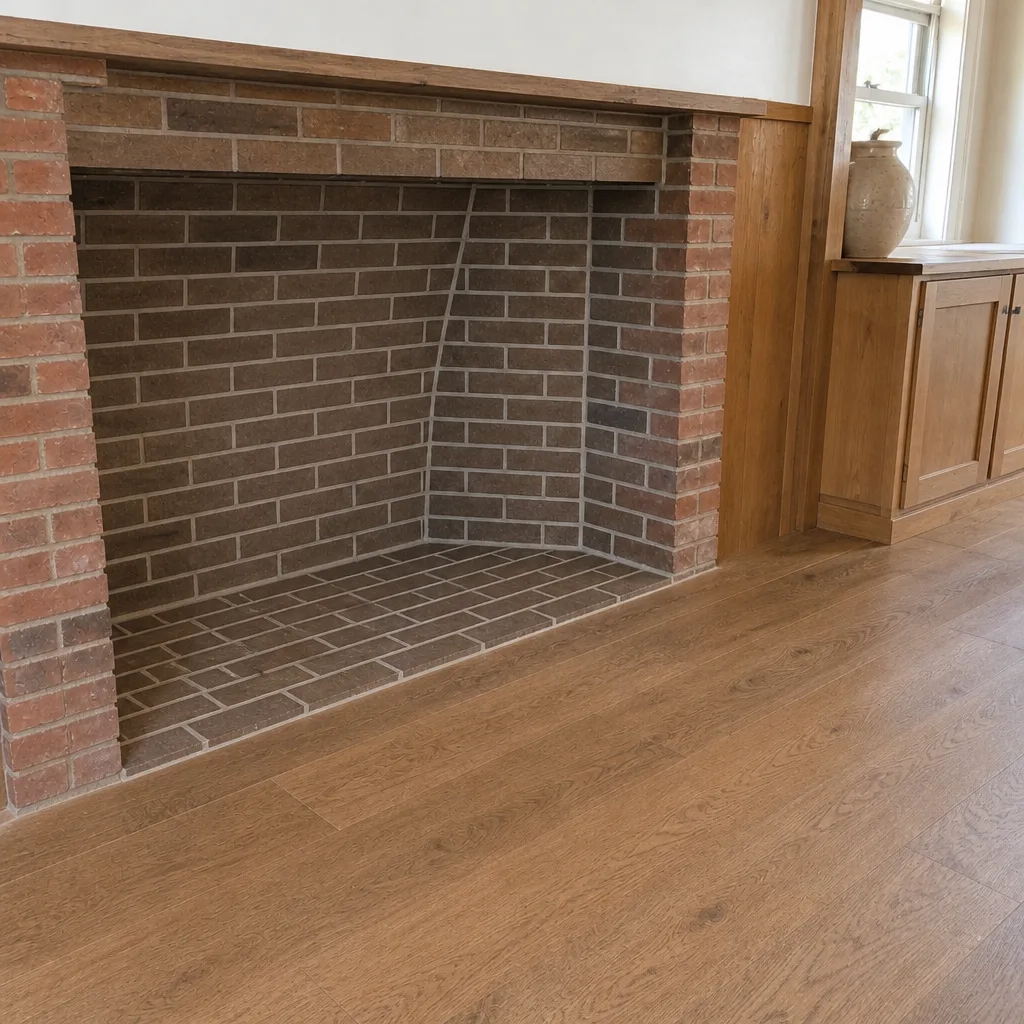
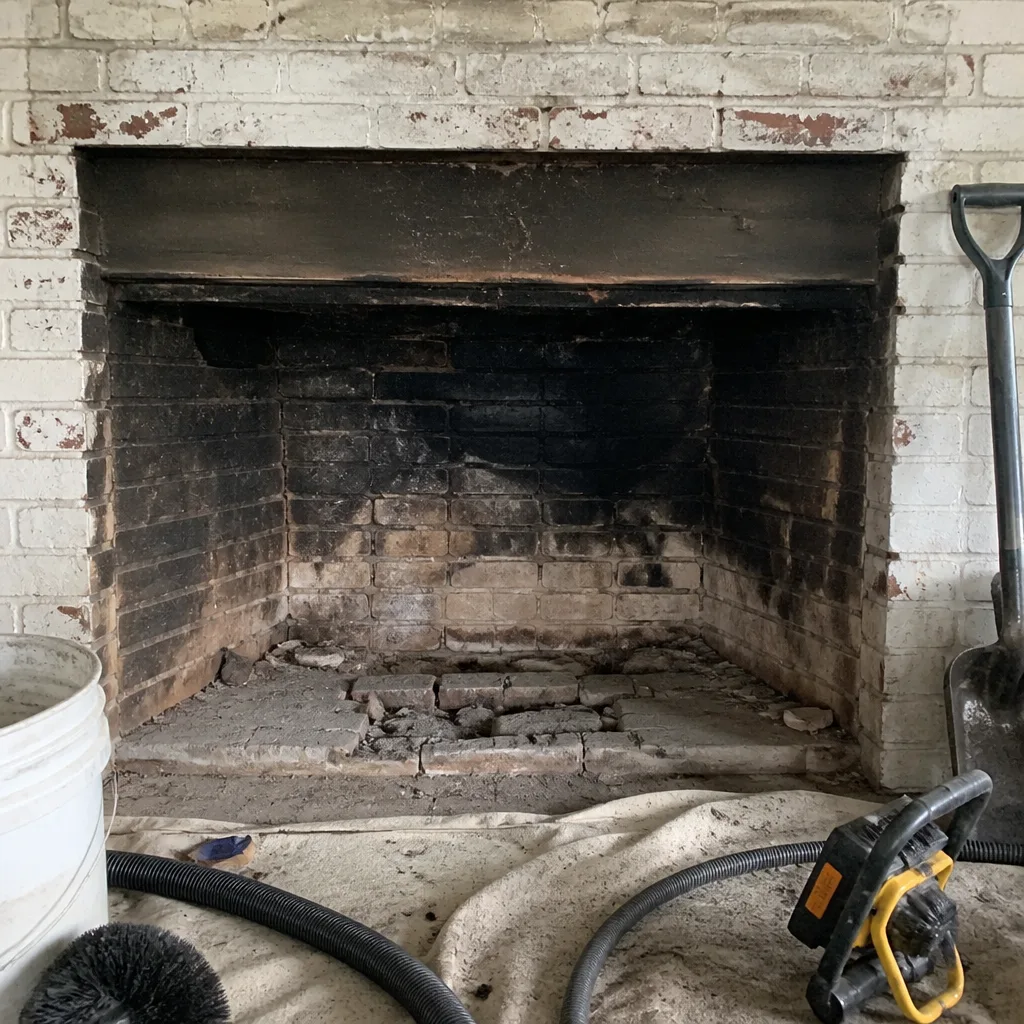
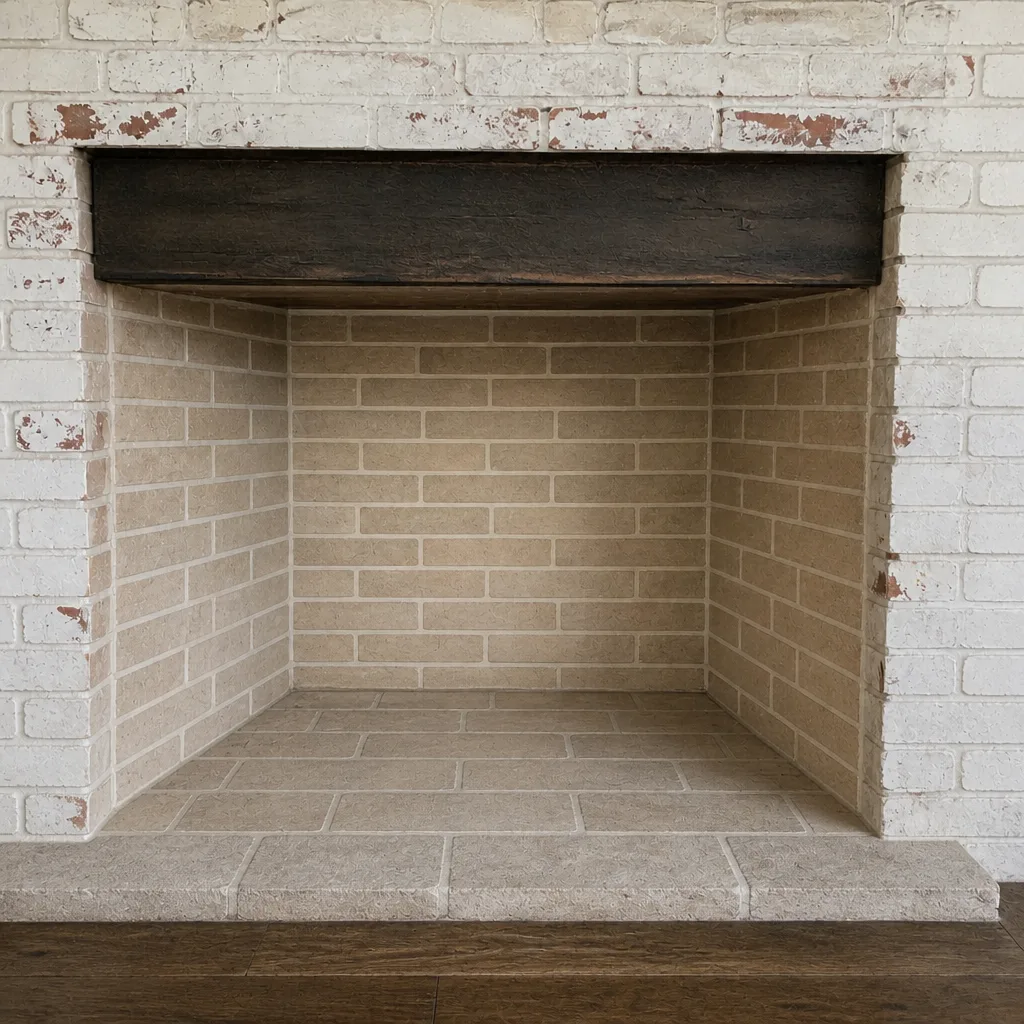
See the difference
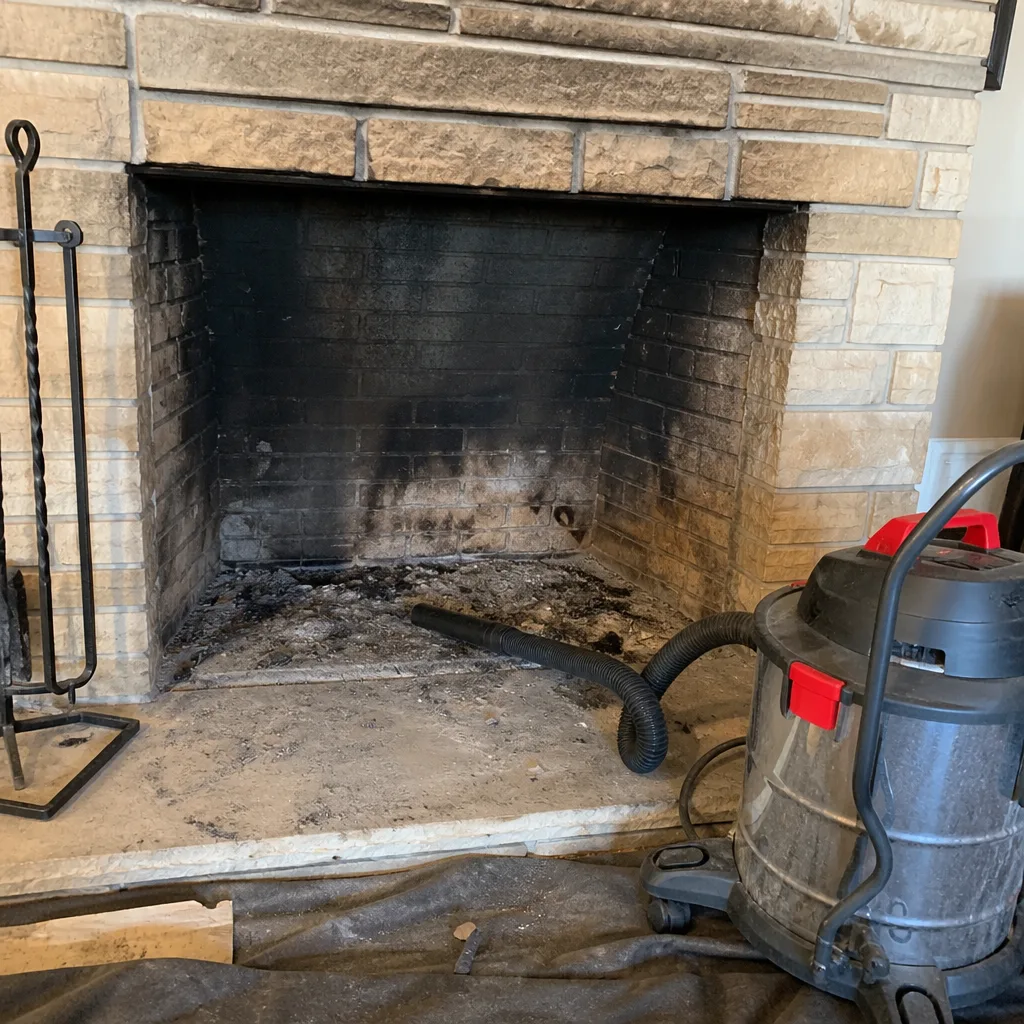 Before
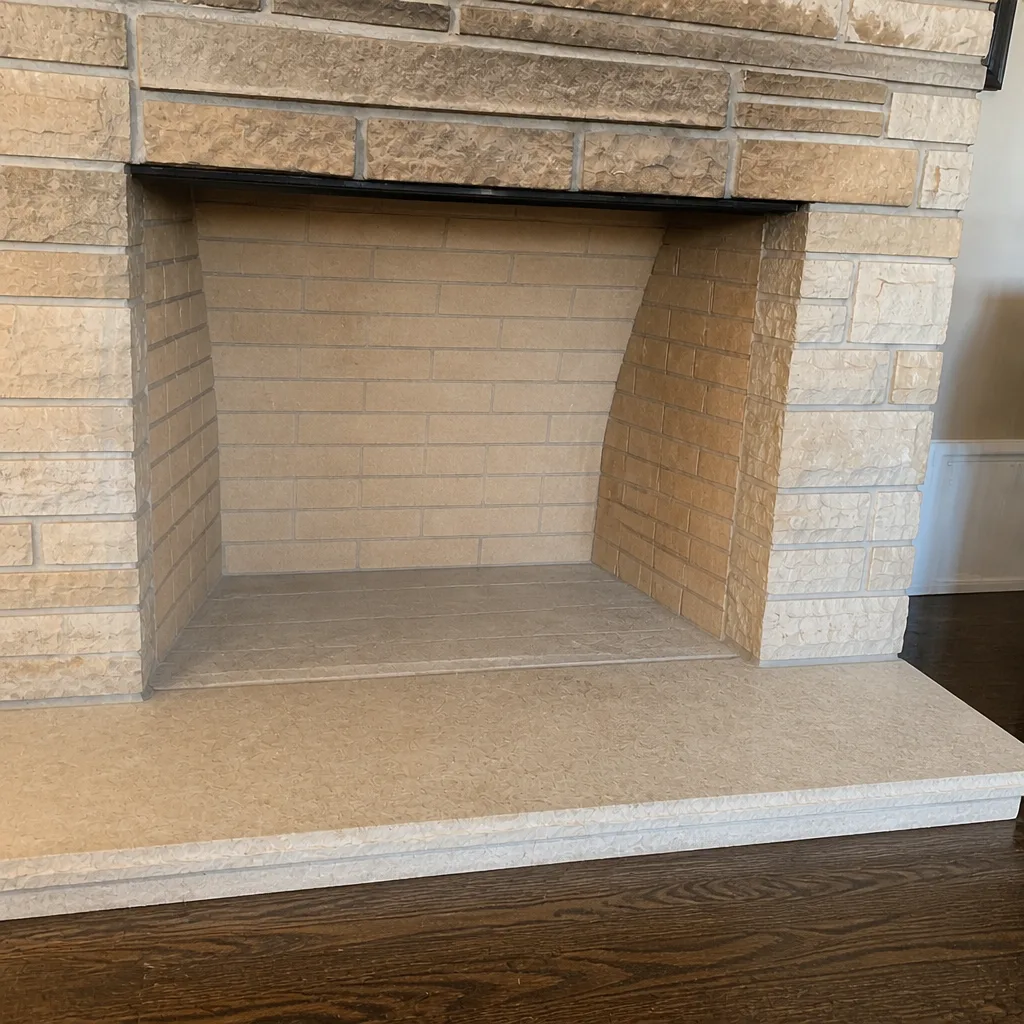 After
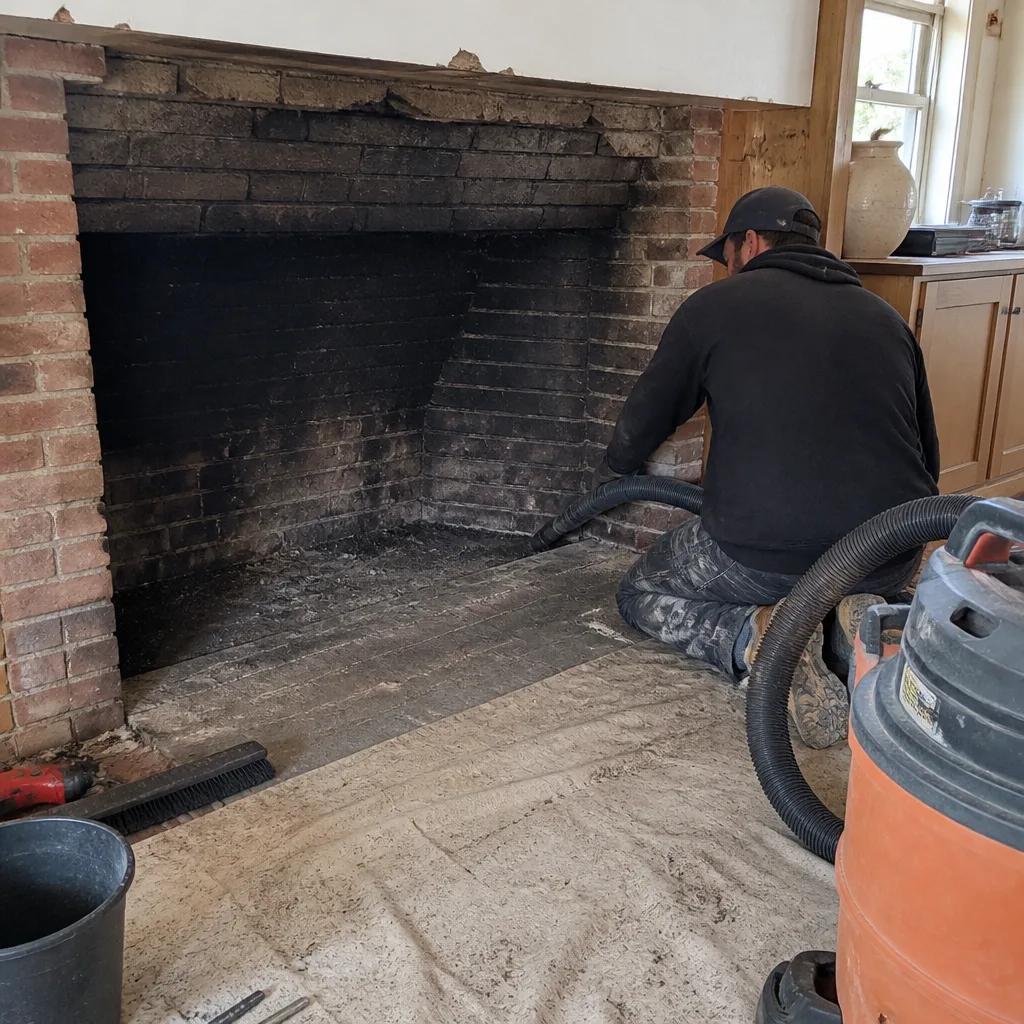 Before
 After
 Before
 After
When to Call a Professional
A chimney is a system, and a system has an appropriate time to be checked. Call a professional if you haven’t had the chimney swept in a season of regular use, if you notice a smoky smell in the room when there’s no fire, if the damper closes loosely, if you’ve seen cracked brick or missing mortar in the firebox, or if water has been getting into the firebox after storms. Call if you’re selling your Bellevue home and need documentation, if you’re buying and want a level two inspection, or if your insurance carrier has asked for a chimney assessment. Bellevue Chimney Sweep Co offers free estimates in Bellevue. Call (833) 509-4335. We answer 24/7. Fast dispatch from 7am to 7pm, Sunday through Friday.
Frequently Asked Questions
A chimney sweep is priced per job by the written estimate, and the estimate is free. The price depends on the flue, the amount of creosote, and whether you need an inspection level one or level two. Ask for an itemized quote before you book so you know what’s covered. Call (833) 509-4335 for an exact quote, estimates are free.
Only if the liner is actually compromised, and you should be shown the evidence before anyone recommends replacement. A camera inspection or photos of the finding let you see the condition for yourself. Some deterioration can be addressed without a full tear-out. If a contractor recommends a liner without showing you why, get a second look. Call (833) 509-4335 to book a sweep and inspection, and we’ll show what we find.
Sweep based on use, not a fixed calendar. A chimney with regular fires through a season needs a sweep after that season. A chimney used occasionally can go longer, but should still be inspected. If you’re burning through Bellevue’s wet months, plan on an annual sweep and inspection. Call (833) 509-4335 to book one.
Creosote builds up in the flue and becomes harder and more flammable with each season, which raises the risk of a chimney fire. Water intrusion from a failing cap or crown adds a second problem, degrading the liner and masonry over time. Neither gets better on its own. Call (833) 509-4335 and we’ll assess where your chimney stands.
Yes, and that’s the model to look for. A dedicated specialist can sweep, inspect, repair masonry, install caps and crowns, and reline in the same accountability chain. Bellevue Chimney Sweep Co handles all five service lines directly, so a problem found during a sweep gets fixed in the same call rather than handed to a referral. Call (833) 509-4335 to schedule.
Yes. A contractor’s license covers general construction; a CSIA credential is chimney-specific and earned through chimney-specific training and examination. A licensed builder isn’t trained to assess a flue or a liner. Ask both questions and treat the CSIA answer as the one that tells you what you need to know. Call (833) 509-4335 to book with a chimney-focused team.
Read more about the chimney sweep service, or book a free estimate and we’ll take it from there.
The Bottom Line
Hiring a chimney contractor in Bellevue comes down to four checks: credentials, itemized quotes, specific insurance coverage, and evidence for any recommended repair. A specialist answers questions about liner systems and in-house repairs without hesitation, shows you what they find, and can fix it in the same call. A generalist with a brush can’t. Our technicians have up to 11 years of experience, and we work with trade-grade products from DuraFlex, Olympia Chimney, Famco, Copperfield, HeatShield, and Gelco, because those names mean something to the trade. When the chimney is swept, inspected, and repaired by the same crew from start to finish, you have one accountable specialist instead of a handoff chain.
Call Bellevue Chimney Sweep Co at (833) 509-4335 for a free estimate. We answer 24/7. Fast dispatch from 7am to 7pm, Sunday through Friday. Nothing is recommended without camera evidence you can see for yourself, and we’ll tell you plainly when work can safely wait.
Written by the team at Bellevue Chimney Sweep Co.